Bowel cancer is the second biggest cause of cancer death in the UK.
Early diagnosis increases the chance of improving patient outcomes.
Early detection of caner benefits the patient, the health system and society. Bowel cancer symptoms can be spotted by trained health professionals, including community pharmacists.
People in deprived areas are more likely to have their bowel cancers detected at a late stage and consequently have poorer outcomes.
How do we improve early detection rates in these communities?
Often people in these areas have better access to a community pharmacy than to a General Practitioner (GP). Community pharmacies could provide an opportunity for early detection of bowel cancer for this sector of the population. However, pharmacy staff are not routinely involved in talking with the public about bowel cancer. This study was carried out to determine the opportunities that community pharmacies may provide.
Our Aims
- To produce practice guidelines for community pharmacies to help identify people who may have early stage bowel cancer and help them to get appropriate diagnostic tests and support.
- To produce research recommendations to optimise the way in which community pharmacies may help improve rates of early detection in bowel cancer.

Our Design
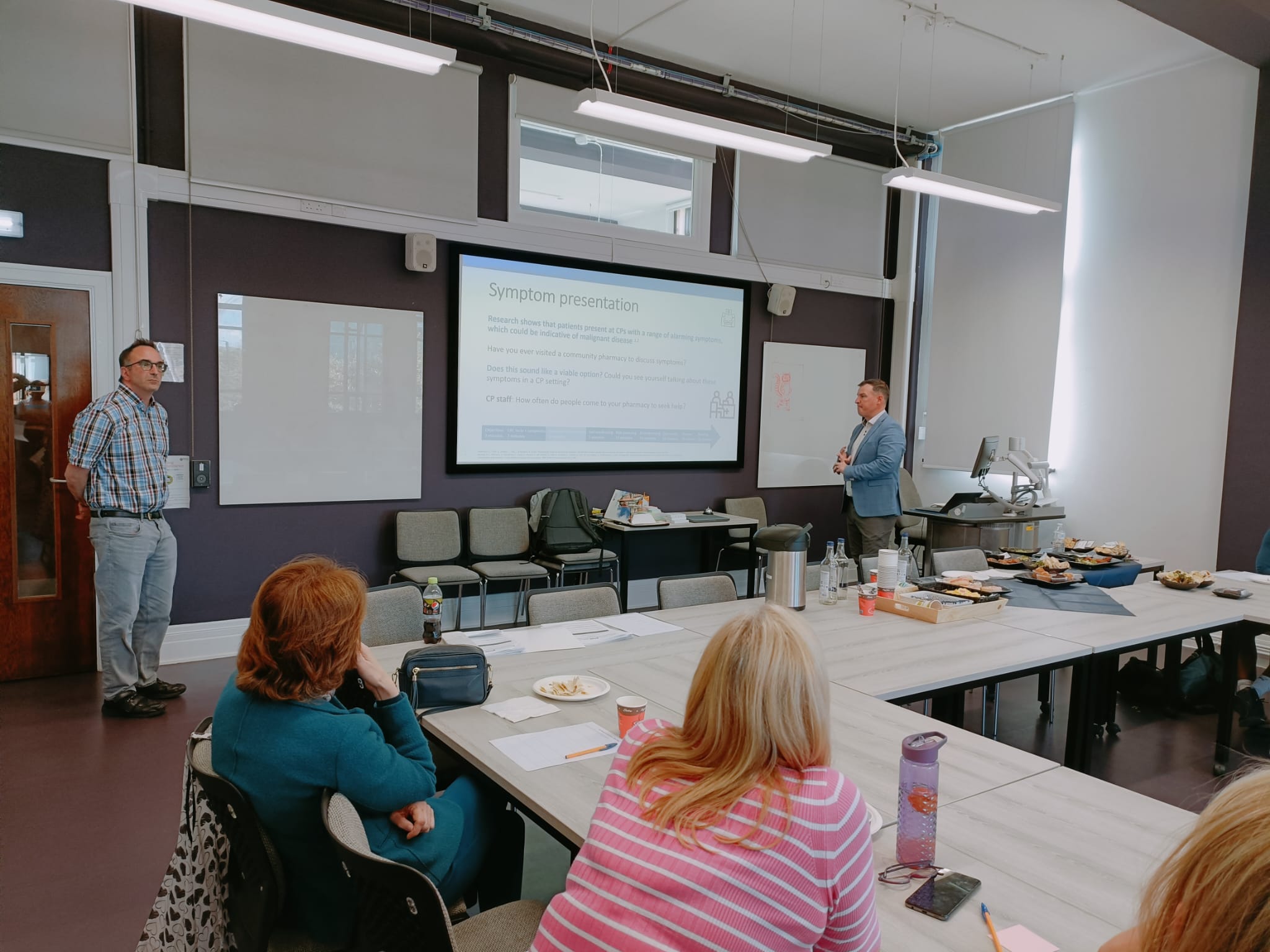
The project brought together people working in community pharmacy, primary care, bowel cancer specialists and members of the public to discuss the pros and cons of community pharmacy staff talking to patients about bowel cancer. The groups then proposed and voted on guidelines on how community pharmacy staff could help when people are invited for bowel cancer screening or trying to manage bowel-related problems which could be signs of bowel cancer. Face to face workshops were held in London, Newcastle and online.
At our workshops, we talked about what is known about bowel cancer, how it is diagnosed, and why catching it early is important. We then discussed whether there are ways in which community pharmacy staff could help raise bowel cancer awareness without causing undue alarm. We also discussed whether pharmacy staff should have access to tools commonly used in primary care to identify people who are at risk of bowel cancer and signpost them to receive further help from GPs or other specialist services. Participants were asked to vote for what they think are the most important services pharmacy staff can perform.
In the final workshop we brought together representatives from both regions to compare practice guidelines and research recommendations, and discussed next steps and dissemination.